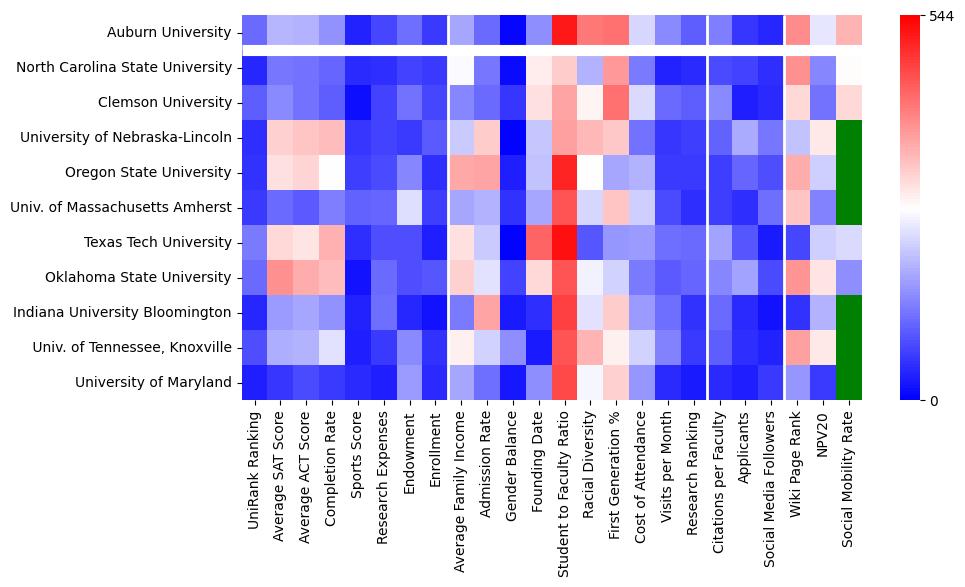
Auburn University, established in 1856 as the East Alabama Male College, has evolved into a prominent public research institution. Situated in Auburn, Alabama, it became the first land-grant university in the state in 1872 and was renamed Alabama Polytechnic Institute in 1899, before adopting its current name in 1960. With a rich history that spans over a century and a half, Auburn has grown to encompass a sprawling 1,841-acre campus, offering a vibrant and engaging environment for its student body of over 30,000.
What sets Auburn University apart is its strong sense of community and tradition, coupled with a commitment to student engagement and success. The university is renowned for its spirited athletics program, particularly its football team, which has fostered a passionate fan base. Auburn's War Eagle battle cry and the rolling of Toomer’s Corner are cherished traditions that enhance school spirit and camaraderie. Additionally, the university's dedication to service is exemplified through various outreach initiatives and community service projects, reflecting its motto, "For the Advancement of Science and Arts."
Academically, Auburn University boasts a diverse array of programs, with particular strengths in engineering, business, and agriculture. The Samuel Ginn College of Engineering is especially notable, consistently ranked among the top engineering schools in the nation, offering cutting-edge research opportunities and a robust curriculum. The Raymond J. Harbert College of Business is another standout, recognized for its strong focus on entrepreneurship and leadership, providing students with practical experience and a global perspective. Auburn’s College of Agriculture also holds a distinguished reputation, contributing significantly to research in sustainable farming practices and food systems.
Despite its strengths, Auburn University faces certain challenges, particularly in terms of diversity and inclusion. While the university has made strides in recent years to increase diversity among its student body and faculty, it still has room for improvement to reflect broader societal demographics. Additionally, some students and alumni have voiced concerns over the need for more modernized facilities and classrooms to keep pace with technological advancements and evolving educational needs. Nonetheless, Auburn continues to address these areas with ongoing initiatives and strategic planning to enhance the overall academic and campus experience.